Using Collaborative Activities to Engage Faculty in Reflecting on the Core Skills and Knowledge Expected for Majors (Physics)
Effective degree programs are guided by clearly defined program-level student learning outcomes (SLOs), or the core skills and knowledge that students are expected to achieve upon successful completion of the degree program or major, which help faculty design an intentional and coherent curriculum and undergraduate educational experience. At WSU, undergraduate programs and faculty are responsible for developing and regularly updating these outcomes to reflect what faculty most want students to learn through their intended curriculum. As a good practice, faculty apply their disciplinary expertise to determine program-level SLOs that are specific and critical to the major and discipline.
At the end of the Spring 2025 semester, faculty in the Department of Physics and Astronomy convened a departmental retreat focused entirely on the undergraduate program. Through a series of individual, small- and large-group brainstorming sessions, faculty engaged in a comprehensive reevaluation of the knowledge, skills, attitudes, and traits they believe are essential for today’s physics graduates. This collaborative effort, planned and facilitated by the department’s Undergraduate Studies Committee aimed to ensure that the program’s learning outcomes reflect the evolving demands of the discipline, industry, and graduate education, and to inform the ongoing curricular restructuring efforts undertaken by the department.
The retreat began with an individual brainstorming activity, where each faculty member generated a list of concrete competencies—ranging from conceptual knowledge and skills to professional attitudes—that graduating physics majors should successfully demonstrate. Faculty were encouraged to think expansively, beyond current departmental capabilities, to envision the ideal graduate that would be an impressive candidate for employment or graduate studies in the discipline.
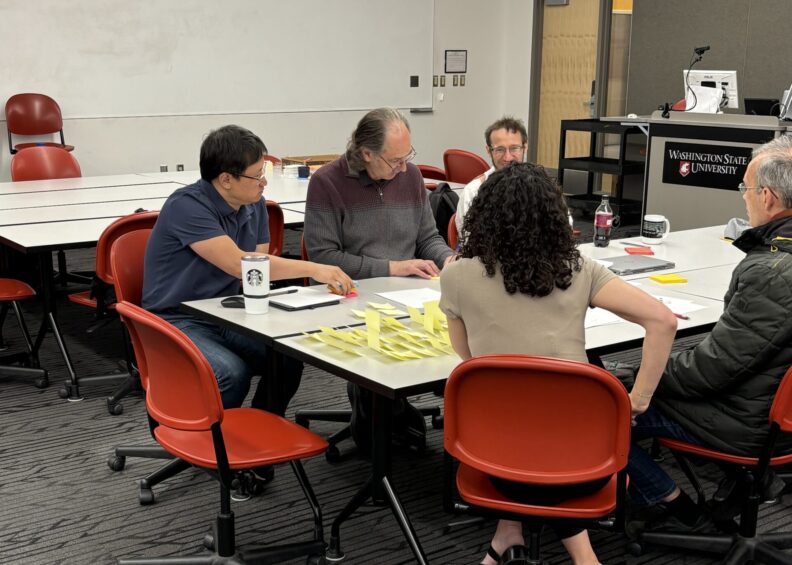
Next, faculty formed pairs to further brainstorm and refine their lists, consolidating overlapping items, elaborating on and breaking down broad competencies into specific knowledge and skills, and identifying new competencies emerging through thoughtful dialog. These discussions then continued in randomly assigned groups of four, culminating in the creation of a comprehensive set of proposed competencies.
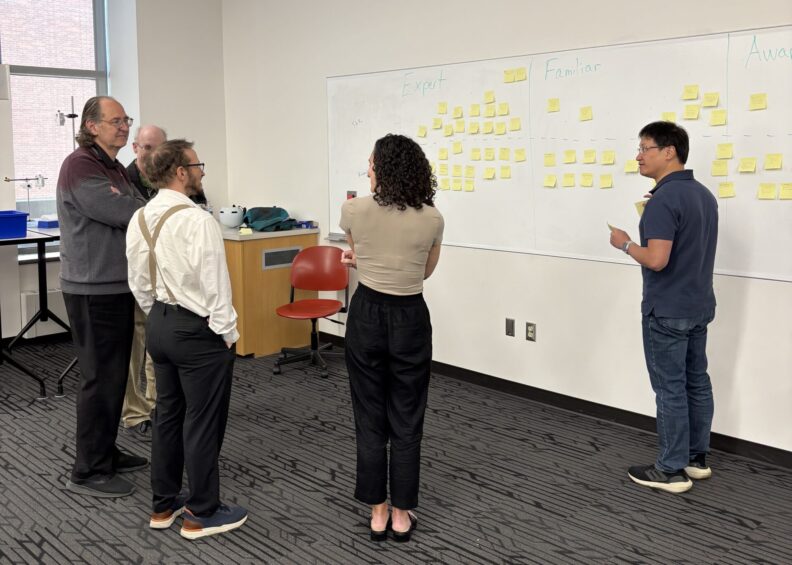
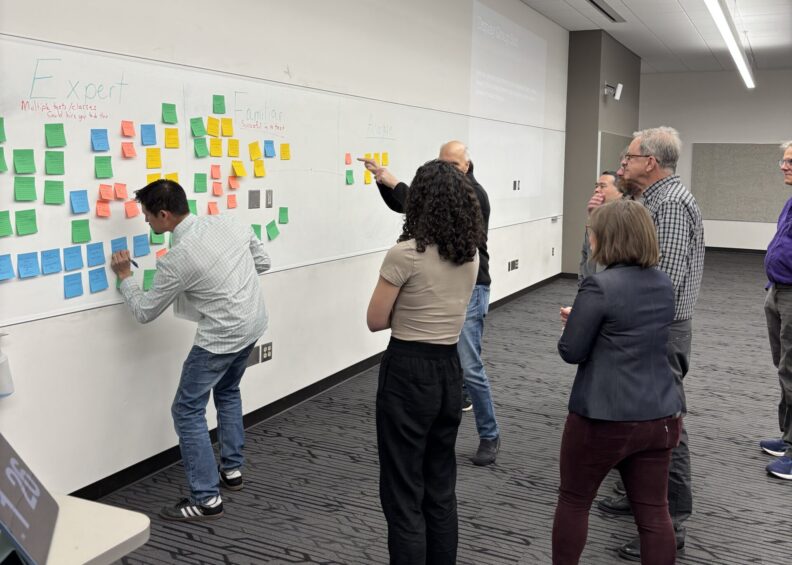
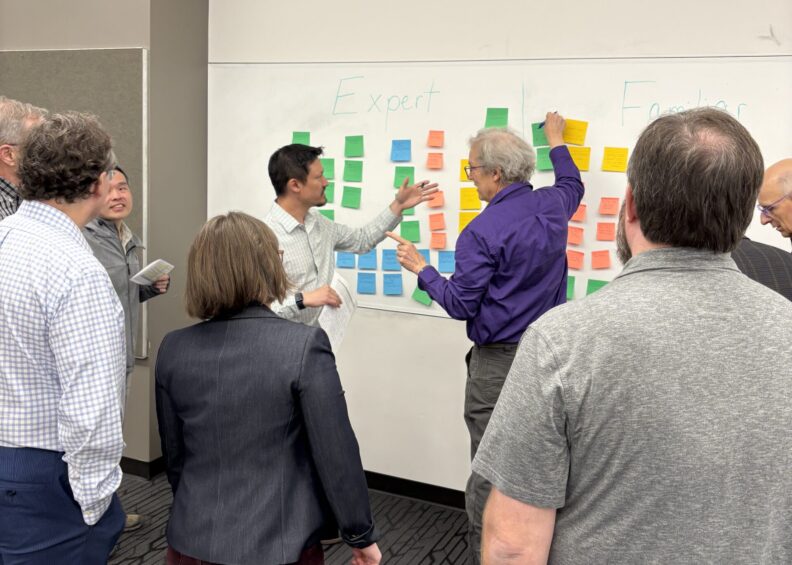
To facilitate categorization and prioritization, the groups wrote each unique competency on separate post-it notes, then sorted them on a whiteboard into three categories representing different mastery levels: Expert, Familiar, Aware. This classification process prompted lively discussion and reflection, as faculty considered the appropriate depth of mastery for each competency.
The next retreat activity, a gallery walk, allowed faculty to move around the room to review and comment on each group’s ideas and contributions, fostering engaging cross-group conversations and surfacing additional insights. In case of disagreements with posted competencies or the mastery classifications, faculty were encouraged to add notes next to the specific items on the board.
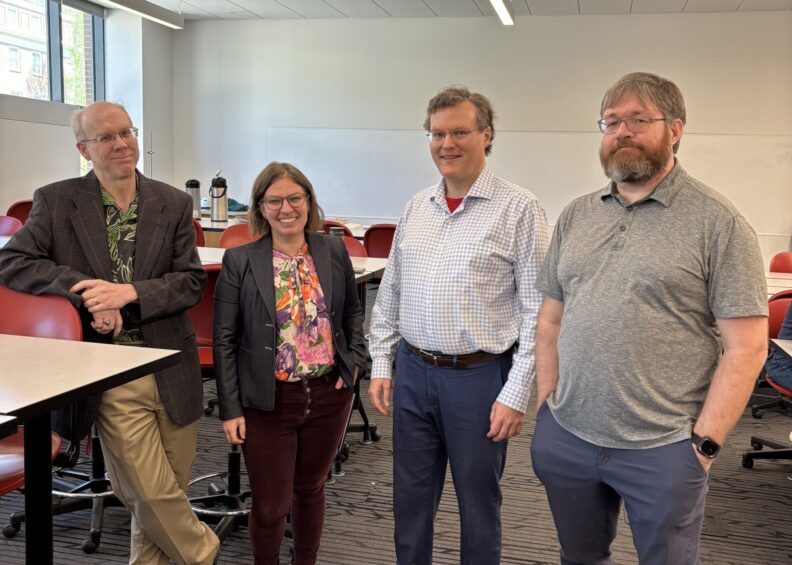
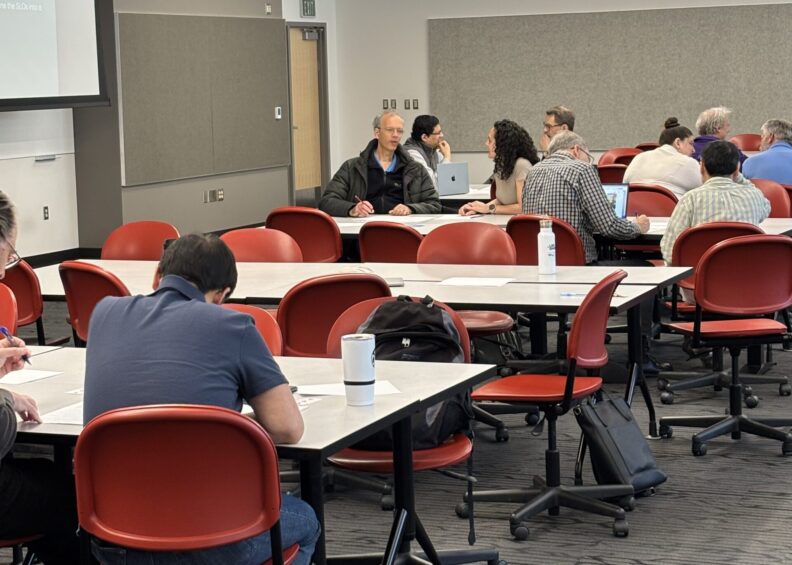
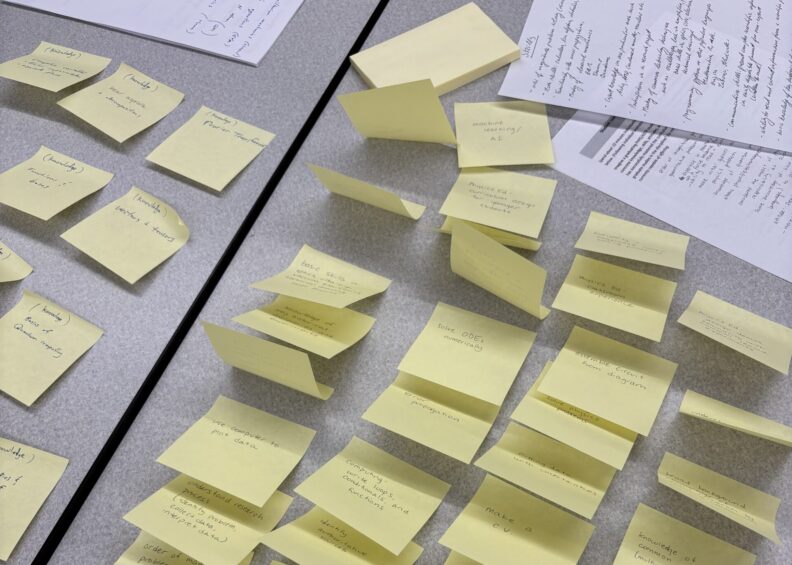
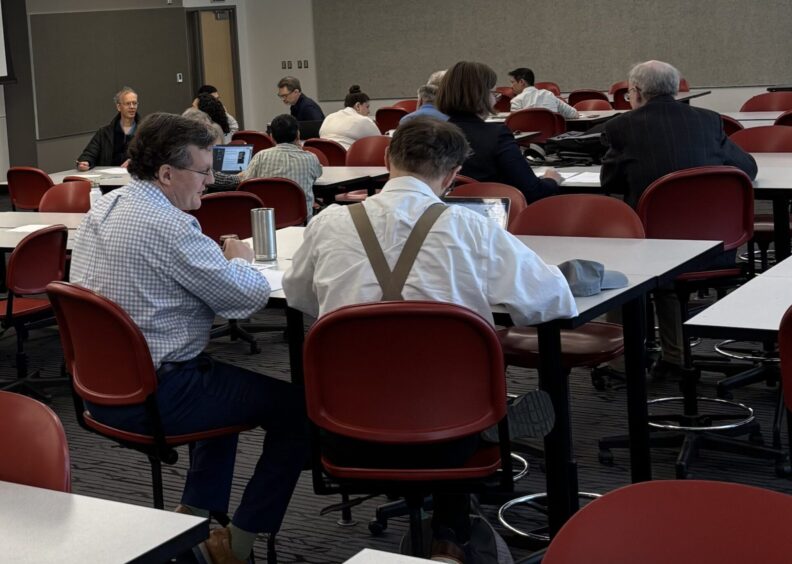
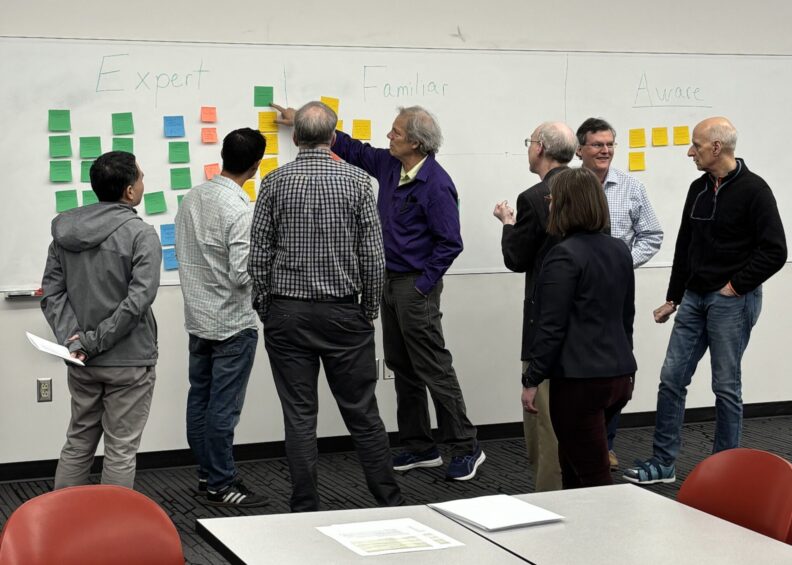
The retreat concluded with a full-group discussion focused on student competencies and program-level SLOs, the overall undergraduate curriculum, as well as reflections on the retreat process. The outcomes of this collaborative effort, including the identified competencies and faculty feedback, were documented by the Undergraduate Studies Committee and will directly inform the program-level SLOs and the department’s curricular review and restructuring efforts. “I could not have been more pleased with the attendance, the participation, and the outcome,” expressed Department Chair Brian Saam. Faculty Assessment Coordinator Michael Allen added, “we accomplished a lot of good work on that day.”
For more information on program-level SLOs, see ACE’s Quick Guide to Program-level SLOs (PDF) and Program-level SLOs Toolkit. ACE is also available to collaborate or consult with undergraduate programs on assessment efforts, including the development and revision of program-level SLOs; contact us for more information.